These are a few advertisements that i liked and thought would be good to refer to. I will use these as my examples and references when creating my own advertisement. I will take aspects from all of these different adverts and more.
This is a few general facts and reviews of the film.
Director: Peter Weir Writers: William Kelley (story and screenplay),Pamela Wallace (story) & Earl W. Wallace (story and screenplay) Actors: Harrison Ford, Kelly McGillis, Josef Sommer, Lukas Haas, Jan Rubes and Danny Glover. Awards: Won 2 Oscars. Another 10 wins & 25 nominations
Storyline: Samuel Lap is a young Amish boy who witnesses a murder in Philadelphia while traveling with his mother Rachel. A good cop named John Book must go with them into hiding when the killers come after them. All three retreat to Amish country and Book has to adjust to the new life style, and his feelings for the boy's mother. Of course the killers are still on their trail. Written by Greg Bole.
User Reviews: As good as film-making gets 9 May 1999 by ken c. (Windermere, Fla.) I've seen hundreds, maybe thousands, of films, and when asked which is my favorite my decision keeps coming back to "Witness," Australian director Peter Weir's masterpiece. Fabulously acted, beautifully photographed . . . it's just perfect. Outside of the well-known stars (Harrison Ford, Kelly McGillis, Danny Glover) look for brilliant work from Josef Sommers and an amazingly understated performance by the late Alexander Godunov. This review tells us that Witness is a good all round film and that the well known stars are not always the best performing actors. He describes it as "As good as film making gets" meaning it obviously had a great impact upon the viewers. Professional review: 1985 saw its fair share of ultra-trashy thrillers but Peter Weir's "Witness" bucked the trend with an overall far calmer veneer, under which hid considerable tension. It's a fascinating and quiet world that Weir paints.A lot of care and attention has gone into both the Oscar-winning screenplay and the beautiful cinematography, to create a powerful and romantic story. By the BBC For the full review go to http://www.bbc.co.uk/films/2000/09/04/witness_review.shtml This review from the BBC tells us that this thriller tops all of the 1985 thrillers because it isn't "trashy". I think that the reviewer thinks this because it is original, it isn't your run of the mill thriller. The plot doesn't follow the stereotypical thriller, it demonstrates that not all thrillers are about psycho individuals. My opinion of the film: I thought that Witness was a very shocking but also beautiful film because it had a lot of aspects of the thriller genre which created fear,suspense and shocked the audience. But it also created the beautiful aspect of the countryside and romance. The film demonstrates the good and evil in the world at the time, it shows the audience the difference that technology makes within the world. It tells the audience how corrupt the world is slowly becoming. Aspects of the Thriller Genre within the Train station scene, the Toilet scene and the Street scene:
Train station: The scene starts off at Grand Central Station, this is a repeatedly used location within thriller films. An example of this is Once Upon A Time in America. The high angle shot of the station is used make the people look small and insignificant but it is also used to connote a sense of confusion and fear from the Amish point of view. The Amish would enter this place and be quite scared because of how busy and fast everything is. I also think that this shot makes the people below look like ants, it shows that everyone is busy working and moving incredibly fast. The use of low lighting also gives off a corrupt and degrading feel to the station, the muted colours also contribute to this. This high angle shot of Samuel Lapp, one of the main characters, demonstrates how insignificant he is within the station. The shot also shows the audience how lonely it can be in the station,within the world because you are so small in comparison. The shot is also a mixture of an over the shoulder shot and POV shot, it is as if the statue is watching over Samuel; the low lighting adds a dark,lonesome and miserable feeling to the shot.This all contributes to the thriller genre. Toilet Scene:
The toilet scene has thriller written all over it. The toilet is small and dirty, it adds a claustrophobic feel to the scene and to the characters, as if they are trapped. The claustrophobic spaces in thrillers are repeatedly used to frighten people. The toilet is very grungy and dirty adding to the corrupt, worn down and "low life" feel in the scene. It connotes that people don't care about the conditions, they mind their own business and couldn't care less about their surroundings. As Samuel enters the toilet he looks at the surroundings and doesn't feel safe, but when he looks at the police officer he feels comfortable. The lighting in the toilet is very low and makes a murky and grimy effect which adds to the corrupt feel, it isn't bright and safe. As the two other men enter the room, Samuel is in the cubicle looking through the gap. This connotes a feel on entrapment and fear. Although the cubicle is claustrophobic, it seems that Samuel seems safe for a short period of time. During the murder scene there are a lot of close ups to capture the emotions in the scene and to capture focus points, for example, the knife cutting the officers throat. These shots are used to show the viewers whats going on and give them clues about whats about to happen.
There are also a few extreme close ups of Samuel's eye, this is used to show how shocked and scared samuel is. It is also used to show that it is something that is life changing, something disturbing. The use of POV shots from Samuel's point of view is very effective as well because it brings audience into the film, it connects them with Samuel and makes them see what hes seeing. Making the audience feel for Samuel and what is happening. When Mcfee ( Danny Glover) starts to open the cubicle doors, it creates a huge amount of tension and anticipation, it makes the viewers scared for Samuel. This is used to grab the audience from their seats. As Mcfee leaves, the camera is on Samuel and the audience rely on his reaction and Mcfee's footsteps to tell if he is safe or not.
Street Scene: As John Book (Harrison Ford), his friend,Rachel and Samuel are in the car, there are a lot of indicators about the place that they are in. The streets are very low lit, dark, gloomy and dim which connote depression and corruption. The roads and paths are dirty and messy, the area looks like a slum and children are playing in it. This shows that the world is changing, it is becoming more corrupt and violent. There are sirens in the background signifying trouble and danger, making it seem a dangerous and violent place as well. It is as if the city represents corruption in the world and the Amish are the peaceful and innocent part. As the scene reaches its end, Book gos into a bar and grabs a man. John Book seems like a very aggressive and violent character, this is his flaw, later on in the film this is demonstrated again when he fights three townspeople when they were picking on the Amish. The flaw in a main character or hero is another signifier of a thriller.
In this film the representation of ideology is very common or cliche. This is because "good"(The Police) are helping to fight the "evil" but the "good" are the evil in the end. This happens more than you would expect in films but still catches out the audience. This is a common ideology in thrillers because it fools the audience into thinking what is wrong.
This is as much detail as I could recall after seeing it in the Cinema a week ago.( I plan to go see it again and take notes)
Director: John Erick Dowdle
Writers: Brian Nelson (screenplay) and M. Night Shyamalan (story)
Devil is a supernatural thriller, my aim is to look at at least one of every type of thriller in one way or another.
It is about five people who go into a lift, one by one they die in the lift because one of them is the devil. Each character has committed at least one sin and they are being punished for what they have done. The Opening Scene:
The film opens with this sentence on a black background, "Be sober,be vigilant; because your adversary the Devil walks around like a roaring lion, seeking whom he may devour. Peter 5:8". This sentence is a warning to the audience, it could entice the audience to believe what is going on. Then it is a black screen while Ramires (Jason Vargas) talks about a story that his mother used to tell him about the devil roaming the earth, he says that someone commits suicide when the Devil is going to appear. A shot of New York city appears upside down with the title of the film, the camera drifts over New York upside down. This camera shot is very risky and rare but it works wonderfully, it connotes disorientation,confusion and upsets the audience. I think the point that Dowdle was trying to get across was that when the Devil is around, the world is upside down and out of place. At the end of the film the camera is hovering over New York but the right way up, telling the audience that the Devil has left and everything is normal again for now. As the camera is panning across New York there is a loud,shocking and jumpy soundtrack in the background, it creates fear and is meant to scare the audience. The camera then dips down from the skyline to a skyscraper and has a bird's eye view of the elevator shaft, the camera travels down the shaft fast and violently to keep the audience on their toes. The lift is a prime signifier of the classic thriller film and this tells the audience straight away that it is a thriller.When the camera reaches the bottom it pans round a corner to see a janitor cleaning the floor with headphones in. The shot is a long shot and this is used to convince the audience to focus on the janitor but in the background a worker from the building flies into the roof of a truck. The janitor is used to distract the audience and then shock them when the worker commits suicide. This makes the audience feel mixed emotions because within the first 4 minutes there is a death.
The main aspect of this film I wanted to look at was the way the lift is used. The lift is a perfect thriller location, it is extremely claustrophobic,can be crowded and cramped as well as the possibility of it breaking down. All of these things scare people and make them fear lifts in thriller films, that's what makes it so effective. But this lift is even worse because it becomes inhabited by the Devil.
Dowdle utilises this aspect of a thriller by trying to make it worse than possibly imaginable, when the lift breaks down in the film everything is calm but then as time passes it adds pressure and anxiety on the audience as they have no idea what is going to happen.
When the deaths and injuries start occurring the lights flash on and off, this is very effective because it creates a feel of mystery which causes the audience to really engage in the film and try and look for details on who killed who. The use of flashing lights also surprises the audience as well as confusing them. The lift blacks out several times during the film for suspense throughout the film.
Close ups of each of the characters faces really shows the tension between the characters and their emotions. Throughout the film there are high angle shots that connotes that the characters are are being watched and looked down upon because of their sins.
User Reviews:
The 'Night' chronicles!, 17 September 2010
Author: sravanth gajula from United States
"I say Night Syamalan is back with a bang. After watching 'The last Airbender', I took a pledge that would be the last time I'm ever gonna pay to watch any movie, Night Syamalan is involved in. But today I broke my promise as I watched 'Devil'. And actually, I was not at all disappointed. In fact, I liked it. All right, I would say it...I loved this movie.
Night Syamalan has come up with a strong and interesting story. The plot looks so simple at the beginning, but it moves on, suspense unveils in a scary, yet logical fashion. The linking between all characters is portrayed in a very effective way. Nothing is ever a coincidence.
Direction is good. Acting is decent. Cinematography is appreciable, especially the wide variety of camera angles and frames attempted to portray a simple elevator as some claustrophobic scary machine. Sound effects are captivating.
I'm already waiting for the next 'Night' chronicle!"
This review of the film demonstrates the effect that the film has on the audience, it seems to convince the audience of its aspects of the thriller genre and excite the audience but scare them at the same time.
These are all examples of Thriller Sub-Genres which are influenced by many different aspects of culture and technology. Conspiracy thriller:
A conspiracy thriller is a thriller which is built up by rumours, lies, propaganda, and counter-propaganda built upon one another until what is conspiracy and what is coincidence becomes an undecidable question.
A common theme in a Conspiracy thriller is that characters discovering a secretive conspiracy may be unable to tell what is true about the conspiracy, or even what is real. The protagonists of conspiracy thrillers are often journalists or amateur investigators who find themselves (often inadvertently) pulling on a small thread which unravels a vast conspiracy that ultimately goes "all the way to the top"
Crime thriller: This particular genre is a hybrid type of both crime films and thrillers that offers a suspenseful account of a successful or failed crime or crimes. These films often focus on the criminal(s) rather than a policeman. Crime thrillers usually emphasise action over psychological aspects. Central topics of these films include serial killers/murders, robberies, chases, shootouts, heists and double-crosses. Some examples of crime thrillers involving murderers include, Seven, A Perfect Murder and No Country for Old Men.
Disaster thriller: In which the main conflict is due to some sort of natural or artificial disaster, such as floods, earthquakes, hurricanes, volcanoes, etc., or nuclear disasters as an artificial disaster. Examples include Earthquake, The Day after Tomorrow,Knowing and Twister.
Mystery thriller: Suspense films where characters attempt solving, or involved in, a mystery. Examples include Flightplan, Mind Hunters and The Number.
Political Thriller: In which the hero/heroine must ensure the stability of the government that employs him. The success of Seven Days in May (1962), The Day of the Jackal(1971) and The Manchurian Candidate (1959) established this sub-genre.
Psychological Thriller: The characters are no longer reliant on physical strength to overcome their brutish enemies (which is often the case in typical action-thrillers), but rather are reliant on their mental resources, whether it be by battling wits with a formidable opponent or by battling for equilibrium in the character's own mind. The suspense created by psychological thrillers often comes from two or more characters preying upon one another's minds, either by playing deceptive games with the other or by merely trying to demolish the other's mental state. Red Eye and Psycho are prime examples.
Supernatural thriller: In which the film brings in an otherworldly element mixed with tension, suspense and plot twists. Sometimes the hero and/or villain has some psychic ability. Examples include, Lady in the Waterand Fallen.
Techno Thriller: A suspense film in which the manipulation of sophisticated technology plays a prominent part. Examples include The Matrix, Jurassic Park, I Robot and Eagle Eye.
Legal Thriller: In which the lawyer-heroes/heroines confront enemies outside, as well as inside, the courtroom and are in danger of losing not only their cases but their lives. Examples include A Time to Kill, Primal Fear and A Few Good Men.
Even though most thrillers are made from a combination of the above sub-genres however some thrillers are put together with other significant genres, including horror, action/adventure and spy genres. Information from http://en.wikipedia.org/wiki/Thriller_(genre)
Director: Sergio Leone Genre: Crime/Drama/Thriller Plot: A tale of the lives of a small group of New York City Jewish gangsters spanning over 40 years. Told mostly in flashbacks and flash-forwards, the movie centers on David 'Noodles' Aaronson and his lifelong partners in crime; Max, Cockeye and Patsy and their friends from growing up in the rough Jewish neighborhood of New York's Lower East Side in the 1920s, to the last years of Prohibition in the early 1930s, and then to the late 1960s where an elderly Noodles returns to New York after many years in hiding to look into the past.
In the opening scene "God Bless America" is playing quietly as the titles and opening credits appear. Sergio Leoni plays this song to create irony, it signifies that America really isn't what people think it is and how its portrayed in the song.In the film he has portrayed it as a corrupt and violent place. He shows this in the opening scene where Eve is murdered and another character is beaten by police officers. He demonstrates that it isn't the "American dream".
Continuing from the credits, there are the sounds of footsteps and of the door opening. This creates suspense as someone is about to enter a room and your wondering who it is. As soon as eve opens the door and enters the audience can automatically realise the genre because of the noir lighting as she walks through the door.We assume Eve is a femme fatale because of the pearls around her neck. These pearls resemble glamour and beauty as well as a mysterious feel. A femme fatale uses beauty,charm and sexual allure to achieve her hidden purpose. We can infer that Eve is a femme fatale because of the genre and the way in which she flaunts her vices. We see that Eve is distraught and innocent in this scene but it is all an act.
As Eve enters the room she attempts to turn on the light: the darkness of the room promotes a creepy feel and cause the audience to feel anxious because of it being a of the thriller genre they may be expecting something to happen. As she is flicking the switch when it isn't working it is causing tension within the audience. This shot of Eve demonstrates her resemblance with the lamp, it is beautiful and glamorous just as she is but when she is killed later on the light is turned out and it could resemble her death.
The camera pans out as she pulls the covers off to reveal the gun shot holes in the bed, this creates suspense and shock as it pans outward to reveal what is going on. The holes in the shape of a body resembles when police mark where a dead body has been, it signifies danger has happened or is going to happen. It is also ironic because the police did this but not to help, this was to scare. Eve also shadows the outline, we could infer that this is where she is going to die.
This shot of the corrupt police is a long shot, it is used to capture all of the characters and what they are doing. This shot demonstrates their corruption as they are holding guns and forcing her to reveal information and then killing. It contributes to the idea of the portrayal of how sinister and corrupted America really is. Low key lighting is used as well as key lighting which captures the characters costumes and faces in the light, it instantly makes the viewer think corrupt police or mobsters when seeing the classic outfits. The use of close ups and mid shots is also repeatedly used throughout this scene this is because Sergio Leoni wants to capture their emotions, especially Eve's.
The use of claustrophobic space is another aspect of the thriller genre and the room they are n is small,enclosed and crowded. This adds fear,anticipation and shock to the scene because the small space makes everything seem scarier and more thrilling.
The whole point of this opening scene is to get Leoni's point across that America isn't what people think it is, to do this he has used all of these thriller aspects and within three minutes and forty three seconds there is a brutal killing of a vulnerable femme fatale.
"Opium Visions" Scene:
The next scene is called "Opium Visions", it opens with the same corrupt police officers beating up a friend of Noodles which is who they are looking for. The use of violence and death in the first opening scenes demonstrate corruption and that the police are ruthless and determined to get what they want. The close up is used to show the intense pain that the character is going through. After this section it cuts to Noodles in an opium den/brothel,Noodles is in a trance of Opium which is another aspect of the corrupt "American dream". Noodles is a flawed hero, he is flawed by his use of drugs (Opium) and in most thriller films, the hero or main character is flawed in some way. The flawed hero is a repeated aspect of the thriller genre. While Noodles is in a trance Leoni uses the sound of a phone ringing which is non-diagetic to create a dramatic effect, it makes the audience wonder why there is a phone ringing and entices them to want it to be picked up to find out who it is. It is technically used as a sound bridge between two scenes. Noodles then has a flash back to when his three friends were killed. Throughout this part of the scene the phone is still ringing and not in view, it creates tension and becomes irritating. The streets are low lit and Leoni uses dark noir lighting and wet gloomy streets to connote the feeling of a classic noir thriller as well as representing the corruption within the area of America in which they live. Then it cuts to the ballroom where the phone is still ringing and it gives a different effect to the part of the scene, it adds anticipation. The night of his friends death and the ballroom party is the end of the prohibition in America. Leoni makes a reference to history, making the day that Noodle's friends were killed and prohibition ended the 5th of December 1933. The scene then cuts to a phone, the phone is still ringing in the background. Noodles enters the room and picks up the phone and starts dialling but the ringing does not stop,it is the phone across from him. This creates shock because you think Noodles is going to cease the ringing but he doesn't it continues because the police are not there to receive it. The lift that Noodles uses when he has regained consciousness is used as a signifier of a generic thriller, especially this old low lit lift which creates a menacing feel. The extreme low angle shot of the lift also connotes a menacing and frightening feel as it descends down the shaft, it could represent a lift going down into the depths of hell.
When Noodles enters the room in which his friend is held captive, a worm's eye shot is used to give Noodles status but also to show Noodles from his friends point of view thus positioning the audience with Noodles to engage them into the film. The shot is also slightly canted connoting that his friend is disorientated. The shot from Fat Moe's point of view also connects the audience with him and shows them what it was like for him in this point in time.
At the end of the scene Noodles opens a locker, which is a another generic thriller signifier props as well as the briefcase. In Pulp Fiction the contents of the briefcase are never revealed, the same happens with Noodles and his briefcase. The suitcase is an enigma. The location which is Grand Central station is a cultural signifier, it informs people that it is America. Many directors use Grand Central station as a location within their films such as Witness by Peter Weir.
Resmebelance to The Godfather Films: Once upon a time in America pays tribute to The Godfather films through looks and narrative. The film is very similar in looks because of the gangster/mobster look from between 1910 and 1950. The way that the people from this time were portrayed was very similar in both films, connoting corruption in both. Godfather Part 2 has a similar narrative to Once Upon a Time in America, it jumps from present to past.
User Reviews:
A masterpiece and an atrocity! 11 January 2005 | by oldguybc (somewhere in CA)
A sprawling, deliberately paced, and generally a superbly crafted piece of work, 19 October 2003
Author:doctorlightning from United States
On par with "The Godfather" and "Goodfellas"..., 19 August 2003
Author: MovieAddict2010 from UK
Make sure you get the director's cut!, 19 September 2004 Author:Philip Van der Vekenfrom Tessenderlo, Belgium These are all reviews i have linked to IMDB, they all suggest that the film is 10 stars and these were the first reviews i came across, this film obviously had a great impact on the viewers. The reviews suggest that most of the viewers are lovers of Sergio Leoni or Gangster movies or both. A lot of people go to see films just because of the genre or maker.
I have manipulated this image and changed the connotations that it tells the audience.
The image connotes a sense of freedom and realism as well as naturalism. The man shows looks like he is enjoying his time hiking and "being on top of the world" as it may seem.
This was my first attempt at manipulation, instead of a connoting a feeling of happiness and joy this image connotes fear and dread as it looks as if he is attempting to commit suicide. This image contrasts with the original because in the first one he is happy because of the natural world but in this image he is in the industrial world, this connotes fear and restriction because he is not free to do what he wants in a city like he is in the wild.
This is my second attempt at manipulation. Now the image has lost it bright, glorious and beautiful effect it seems to connote anger because the rocks are sharp and jagged which promote anger. Now that the image is black and white and there is no light, the man's face has been shadowed and his pose seems to connote his anger with the natural world now instead of his happiness. This image as a whole is much more darker and melancholy.
There are three main types of lighting that I have looked at, Key lighting, Back lighting and Natural Lighting
Natural Lighting:
This image below is an example of natural lighting, the light connotes realism and a natural effect. The light really contrasts with the sand and the sea which add to the realism of the photo.
Back Lighting: This is a prime example of back lighting as it connotes the complete opposite to natural lighting and creates surrealism. The lighting in this example is used to connote heroism and godliness, it makes the character look extremely important and brave.
Key Lighting: Key lighting is used on characters and objects to create different effects. In this particular image it is used to create a light shadow across her face which connotes mystery as well as elegance and beauty.
A shot that shows a scene from a distance (but not as great a distance as the establishing shot). A long shot is used to stress the environment or setting of a scene. In filming your science-fiction movie, for example, you might use a long shot to show the monster causing traffic jams and panicked crowds.
This is similar to the close up to an extreme scale, it is used to focus on small details of the face and connote the different emotions the subject creates or shows the significance of an object. For example, In a crime film this may be used to focus upon a small blood spatter and inform the audience.
This is a high angle shot, it makes the character look small and insignificant in a way or even less important. Its like the character is being looked down upon. For example, in an action film this could be used to show that the "baddie" is a "low life" or "scum" as he is looked down upon.


 Train station:
 This high angle shot of Samuel Lapp, one of the main characters, demonstrates how insignificant he is within the station. The shot also shows the audience how lonely it can be in the station,within the world because you are so small in comparison. The shot is also a mixture of an over the shoulder shot and POV shot, it is as if the statue is watching over Samuel; the low lighting adds a dark,lonesome and miserable feeling to the shot.This all contributes to the thriller genre.
 During the murder scene there are a lot of close ups to capture the emotions in the scene and to capture focus points, for example, the knife cutting the officers throat. These shots are used to show the viewers whats going on and give them clues about whats about to happen.
 When Mcfee ( Danny Glover) starts to open the cubicle doors, it creates a huge amount of tension and anticipation, it makes the viewers scared for Samuel. This is used to grab the audience from their seats. As Mcfee leaves, the camera is on Samuel and the audience rely on his reaction and Mcfee's footsteps to tell if he is safe or not.
 As John Book (Harrison Ford), his friend,Rachel and Samuel are in the car, there are a lot of indicators about the place that they are in. The streets are very low lit, dark, gloomy and dim which connote depression and corruption. The roads and paths are dirty and messy, the area looks like a slum and children are playing in it. This shows that the world is changing, it is becoming more corrupt and violent. There are sirens in the background signifying trouble and danger, making it seem a dangerous and violent place as well. It is as if the city represents corruption in the world and the Amish are the peaceful and innocent part. As the scene reaches its end, Book gos into a bar and grabs a man. John Book seems like a very aggressive and violent character, this is his flaw, later on in the film this is demonstrated again when he fights three townspeople when they were picking on the Amish. The flaw in a main character or hero is another signifier of a thriller.
  In this film the representation of ideology is very common or cliche. This is because "good"(The Police) are helping to fight the "evil" but the "good" are the evil in the end. This happens more than you would expect in films but still catches out the audience. This is a common ideology in thrillers because it fools the audience into thinking what is wrong.
 It is about five people who go into a lift, one by one they die in the lift because one of them is the devil. Each character has committed at least one sin and they are being punished for what they have done.
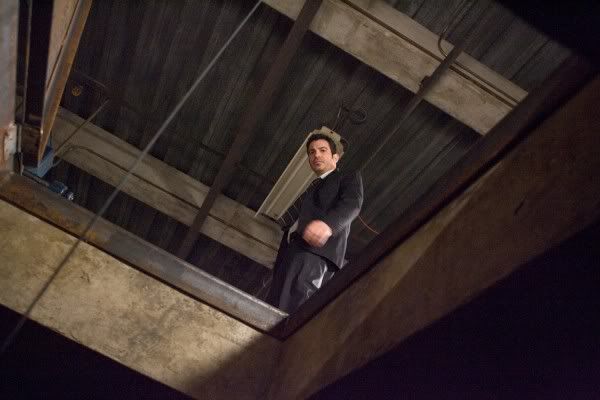 The main aspect of this film I wanted to look at was the way the lift is used. The lift is a perfect thriller location, it is extremely claustrophobic,can be crowded and cramped as well as the possibility of it breaking down. All of these things scare people and make them fear lifts in thriller films, that's what makes it so effective. But this lift is even worse because it becomes inhabited by the Devil.

 A common theme in a Conspiracy thriller is that characters discovering a secretive conspiracy may be unable to tell what is true about the conspiracy, or even what is real. The protagonists of conspiracy thrillers are often journalists or amateur investigators who find themselves (often inadvertently) pulling on a small thread which unravels a vast conspiracy that ultimately goes "all the way to the top"
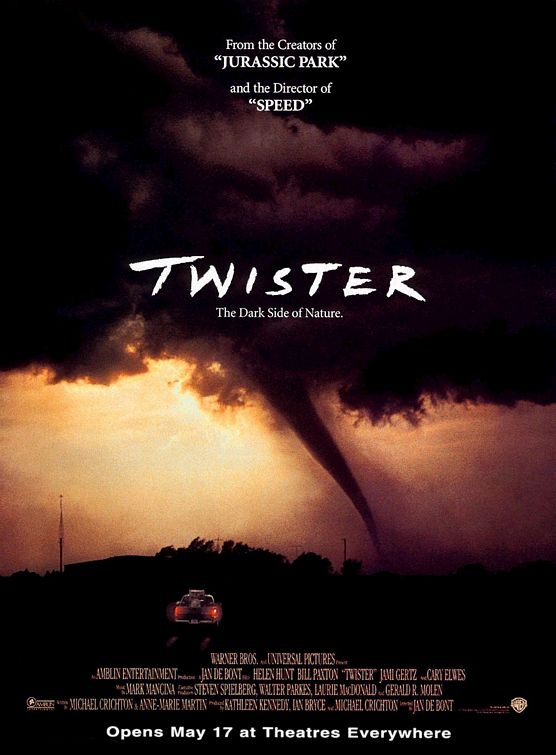 In which the main conflict is due to some sort of natural or artificial disaster, such as floods, earthquakes, hurricanes, volcanoes, etc., or nuclear disasters as an artificial disaster. Examples include Earthquake, The Day after Tomorrow, Knowing and Twister.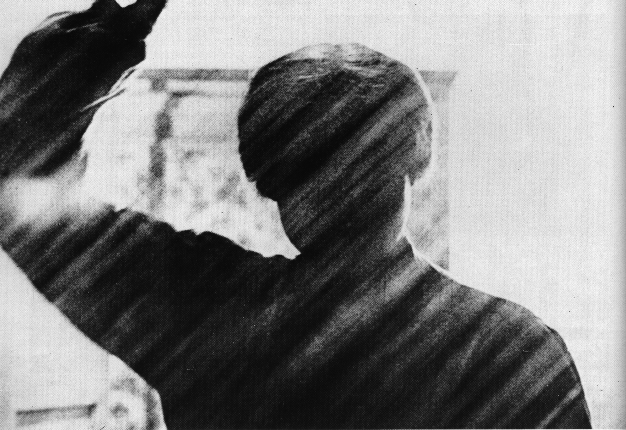

 Director: Sergio Leone


 This shot of the corrupt police is a long shot, it is used to capture all of the characters and what they are doing. This shot demonstrates their corruption as they are holding guns and forcing her to reveal information and then killing. It contributes to the idea of the portrayal of how sinister and corrupted America really is. Low key lighting is used as well as key lighting which captures the characters costumes and faces in the light, it instantly makes the viewer think corrupt police or mobsters when seeing the classic outfits. The use of close ups and mid shots is also repeatedly used throughout this scene this is because Sergio Leoni wants to capture their emotions, especially Eve's.

 Then it cuts to the ballroom where the phone is still ringing and it gives a different effect to the part of the scene, it adds anticipation. The night of his friends death and the ballroom party is the end of the prohibition in America. Leoni makes a reference to history, making the day that Noodle's friends were killed and prohibition ended the 5th of December 1933.
 When Noodles enters the room in which his friend is held captive, a worm's eye shot is used to give Noodles status but also to show Noodles from his friends point of view thus positioning the audience with Noodles to engage them into the film. The shot is also slightly canted connoting that his friend is disorientated. The shot from Fat Moe's point of view also connects the audience with him and shows them what it was like for him in this point in time.
 | by oldguybc (somewhere in CA)